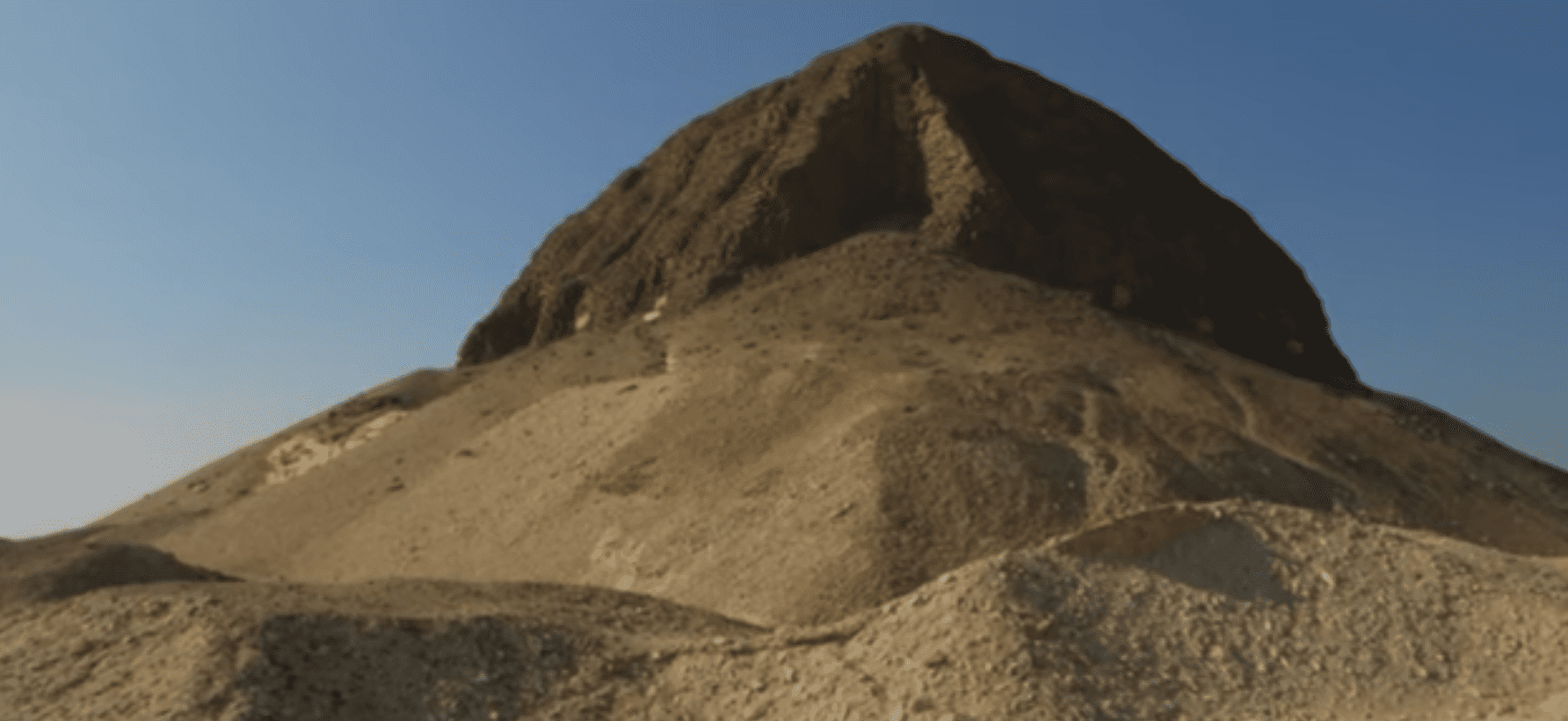
Lahun Pyramid was constructed by Senusert II in the Twelfth Dynasty pyramids. Some believe that the workers of El-Lahun village , known as the Kahun, constructed the pyramid and later served the funerary cult of the king.
The Pyramid was built from mud brick, but its core consists of stone walls that were infilled by mud brick.
Egyptian Ministry of Antiques opened El-Lahun Pyramid for the primary time on Friday, June 28, coinciding with the celebrations of thirtyGregorian calendar month. though the pyramid has been closed since its entrance was discovered up as yet for restoration works, the ministry has set to open it up for the general publicto go to.
A roughly 4,000-year-old mud-brick Egyptian pyramid is opening to the public for the first time this week, according to the north African nation’s antiquities ministry.
The mud-brick Lahun or El-Lahun pyramid was first discovered by British archaeologist William Petrie in 1889 in Fayoum, about 60 miles southwest of Cairo. In 2009, archaeologists discovered a cache of pharaonic-era mummies in brightly-colored, painted wooden coffins, Reuters reported at the time.
The opening of the little-known pyramid followed extensive conservation and preservation work, Egyptian officials said.
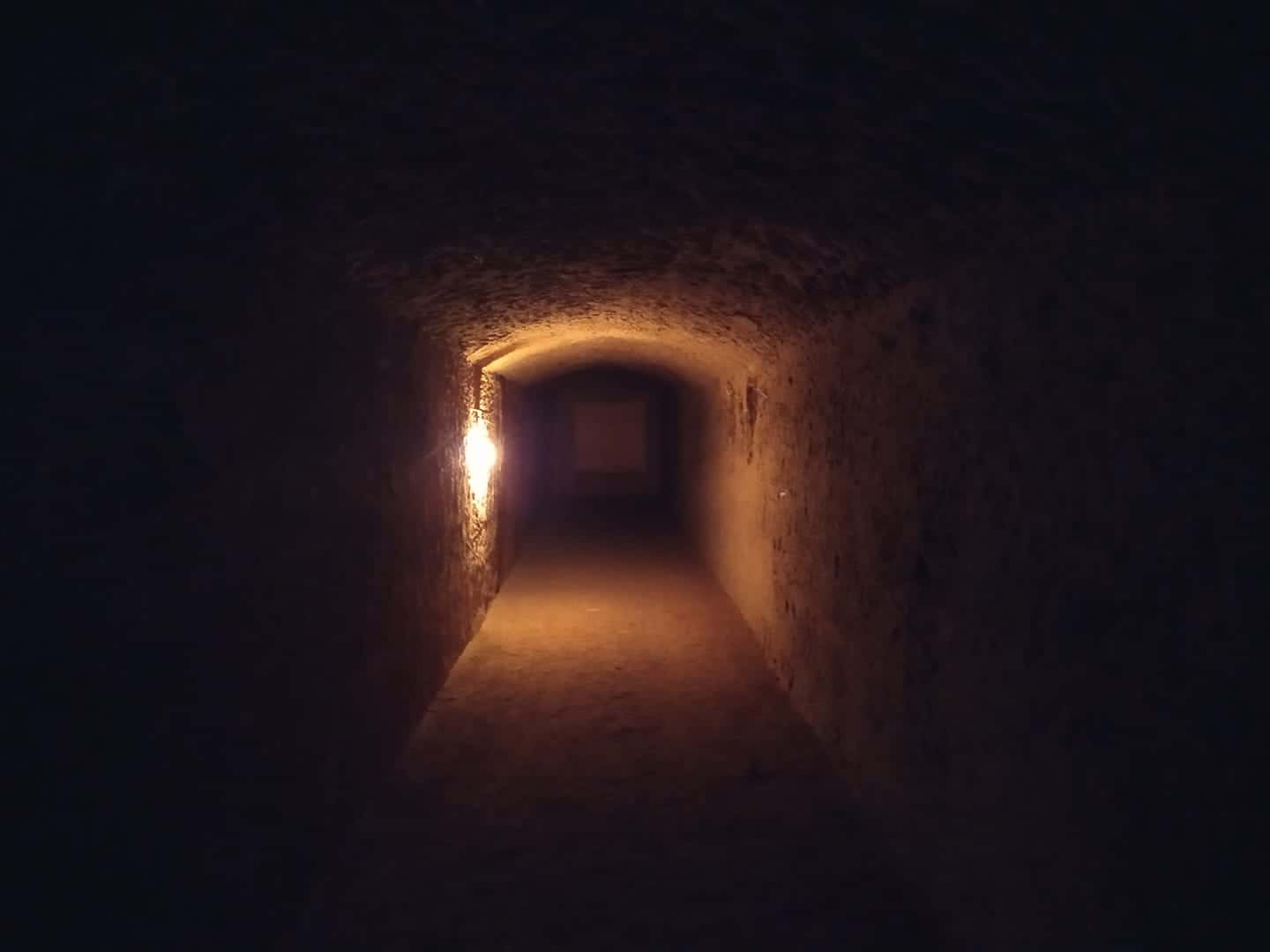
“The conservation work of Lahun Pyramid includes the removal of debris found inside the pyramid’s corridors and burial chamber and installing wooden stairs to facilitate its entrance,” Mostafa Waziri, General Secretary of the Supreme Council of Antiquities, said in a statement.
(MORE: Egypt discovers 4,400-year-old priest tomb in ‘exceptional’ condition)
“It also includes re-installing the fallen stones in the hall and corridor to its original location after restoration, as well as restoring the deteriorated stones of its floor and installing a new lighting system.”
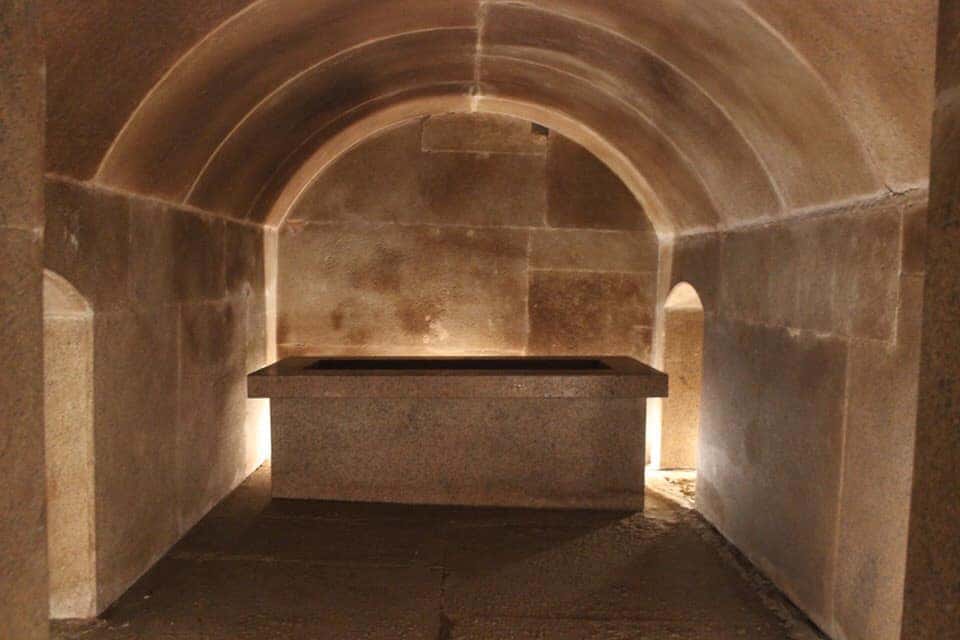
a granite coffin is shown inside the pyramid of Senusret II, known as el-Lahun Pyramid, in Faiyum, Egypt. Li Yan/Xinhua via Newscom
Faiyum, Egypt.
The pyramid was built during the reign of 12th dynasty pharaoh Senusret II, who ruled Egypt from 1897 B.C. to 1878 B.C., according to the antiquities ministry.
(MORE: Great Pyramid’s hidden ‘void’ hailed by scientists, dismissed by Egyptian experts)
The pyramid’s entrance lies on its southern rather than the northern side, unlike most of Egyptian pyramids.
In the same complex, artifacts were also discovered in one of the Middle Kingdom tombs on the southern side of the pyramid.
Ostraka and splinters of picket coffins dated back to varied epochs of Ancient Egypt, were found within the grave.
The General Secretary explained that the new-discovered grave was used over and over throughout subsequent epochs.
Various picket masks of men, juniors and girls were found there. a number of those masks were well inscribed to point out countenances of the face. however some others either were in unhealthy manner but or worn.
He delineate those masks as artifacts showing accuracy and expertise of engraving created by ancient Egyptians.
Doaa al-Nashar, a restoration specialist, that some wooden masks perfectly carved for men were found inside the tomb, indicating that the ancient Egyptians believed the soul could return after death to the body wearing an artistic piece.
about the book lost ancient technology of Egypt Brian Forrester The world has had a long time fascination with ancient Egypt dating back to Napoleon and even the ancient Greeks. What we know of the dynastic people largely comes to us from Greek writings and the relatively modern archaeological field called Egyptology.
What these academics have largely either ignored and or recognized is that the dynastic Egyptians did not have the capability to quarry, transport or efficiently shape hard stones like basalt, granite and diorite. This tells us that the massive obelisks, stone boxes, pyramid interiors and other megalithic works had to precede the dynastic people and also had to have been made using very advanced high technology, in some cases superior to what we have in the 21st century.
This book comes from 6 yearly visits to Egypt, from the Aswan quarry in the south to the Nile Delta in the north chronicling the massive and complex mysterious works of a master civilization that history has forgotten, and historians ignore.
The stone shows us the advanced tool marks left behind, the precision surfaces and vast distances that these monuments, some weighing several hundred tons were moved from the quarries.
You will also see extensive evidence that whoever these great builders were, they were hit by one or more massive cataclysmic events that likely wiped them off the pages of history. Yet their great constructions remain for us to study and wonder about.
Now everything you're going to see in this photos could not have been done by the dynastic Egyptians such as the lid of this granite box you can see those striations which are clearly saw marks and there's no way that that was a copper saw or bronze saw with silica sand being used because silica sand is about the same hardness as the granite itself so it had to have been a saw of a harder material likely diamond or possibly something even more exotic than that this is located in a dark corner of the Museum in Cairo but there it is and then we also have other large stone boxes that some people call sarcophagi but this one's intriguing in that it was damaged during its construction you notice the two circular saw marks there and so obviously this was a series of two powered saws parallel to one another that were running and then accidentally the saw blade on top began to cut deeper into the box and cause the lid to simply snap off and so whoever was making the box simply abandoned the project you can also notice that the front of the saw blade is thinner than the sides which is quite curious .
The schist disc located in the Cairo Museum it's about two to two-and-a-half feet in diameter , it was found at Saqara along with 30,000 to 40,000 turned hard stone bowls .
now you see the three lobes on it they are not angled so it's not as if it was pushing or pulling water it clearly rotated around the central axis but what its original function was is unknown it is not what the authorities call a Lotus Bowl obviously it's a piece of some kind of machine .
some of the turn bowls very very hard stone again there are not 30 or 40 of them but between 30,000 and 40,000 of them were found at Saqara by the archaeologist Emery and again that's also where these schist discs was found in a cache under one of the pyramids.
what this thing was ?? I have no idea but I can tell you that the stone is quartzite which is seven out of ten in terms of hardness so it could not have been made by the dynastic Egyptians and it shows curious burn marks on it.
This is the top of a very large granite box and here you can clearly see tube drill holes again this could not have been achieved by copper or bronze drill bits with sand being used as an as an abrasive .
At Abydos and this is the enigmatic Osirian located underground it was rediscovered in the 19th century large quartzite blocks in the background and then the square pillars that you see here in the foreground are granite which likely came from Aswan which is several hundred miles away and the blocks weigh up to 60 tons apiece and it looks like catastrophic damage happened here as well so we'll see lots of examples of ancient catastrophic damage not done by invading armies but by natural events .
Somewhat fame light bulbs of Dandara were they actual light light bulbs they look very much like what are called Crookes tubes but nobody honestly knows what they originally were an example of electricity maybe but unknown .
At Luxor and compared the size of the people walking with those giant seated figures originally those figures each were made out of one solid piece of stone either syenite or granite and they could not have been made by the dynastic Egyptians .
This huge obelisk which is also located at Luxor one solid piece of granite it could very well be that the hieroglyphs were added later during dynastic times .
At Saqqara a huge ancient site that is the pyramid of pyramid of zoser in the background likely one of the earliest of the pyramids based on the dynastic Egyptians studying the Great Pyramid which preceded the dynastic Egyptians .
look at the size of this shaft of which there are many located at Saqqara deep in the bedrock .
Also at Saqqara we looked down this is a dynastic period shaft of some kind where the staircases go I don't know but they probably lead to an underground system of ancient tunnels look at the rather poor craftsmanship of the dynastic pyramid and then as we walk along we're going to see another shaft and this shaft again goes down into the bedrock itself so it's highly likely that this was achieved using high technology there's the dynastic period work.
Going into the shaft itself farther down you can see that's bedrock At Saqqara we have the fascinating place again look at the upper surfaces of the bedrock it appears to have been burnt by heat in ancient times .
and now we're going through the tunnel system and this tunnel system again was carved into the bedrock
There are two parallel tunnels this is the main one which has several niches inside of which are giant stone boxes each one of these boxes averages a hundred tons the box itself is 70 tons the lid being 30 tons again the stone came most likely from Aswan several hundred miles to the south .
as we walk along further through we'll see very crude hieroglyphics unfinished on the box and academics still insists that the box and the hieroglyphics are contemporary with one another but the hieroglyphics are very poor unfinished and the box is astonishing and beautifully polished again the crabby nature of the hieroglyphics we can see and the very smooth polished nature of one of these massive boxes once again averaging a hundred tons and coming from as one most likely hundreds of miles away
and as we walk through the other tunnel parallel to the first one this is an unfinished box and this tells us a lot because this shows us that quite possibly the roughing out of the box was done outside on the surface and then in this unfinished State was brought into the tunnel and then taken to its niche where quite likely the finishing work would have been done the problem is there was no light in the distant past in these tunnels there's no sunlight that penetrates and there's no SIP marks on the ceiling to tell us that this was dynastic period work and there is the lid of the box which would have preceded the movement of the box itself .
we're now at Tanis which is located in the Nile Delta of northern Egypt and again this is quartzite and notice the powerful heat effect on the right hand side as well the stone seems to have been blown off in some cases everything found at Tanis in general was found underground this is likely a dynastic period reconstruction of massive blocks that were found at Tanis .
Look at the size of that huge slab on the left again the stone probably gained came from the Aswan quarry which is about 700 miles away
and there again quartzite with what looks like scorching now this is what's left of a quartzite statue
and you can see as we get up close that the surface were melted by some intense heat Tannis is one of the most bizarre locations on the planet
and here we see remnants destroyed of up to 15 massive obelisks and it's every piece of stone at Tanis is broken not through human intervention but likely from a giant Cataclysm in the very distant past the site was probably found by the dynastic Egyptians and here again quartzite with heat scorching . well now we've returned to the Giza Plateau area this sphinx is right behind this guy there you can see its head we're exploring the Osiris shaft that has only been open to the public for about two years you can only enter this with special permission but it was absolutely incredible as you can see on his face so we're walking in and were walking straight into the bedrock itself .
and now we're gonna look down to the first level underground and the ladder takes you down approximately thirty feet into a chamber carved out of the bedrock
and now we've gone down the second level which is another hundred feet down into the bedrock luckily they've replaced the ladders because the one on the right is a little bit suspect but the newer ladders are actually quite sturdy and it's well worth it if you go to Egypt now in the second level there are six niches and there are two boxes this has a strange black go on the surface .
see what kind of material it is whether it's organic or not so here we're in the second level and finally this is yourself are we on in the third level it's down a further 60 feet so that means the Osiris shaft as far as we can tell goes at least 200 feet into the bedrock he grew up across the street from the Sphinx and this was the first time he had ever been in the Osiris shaft and finally this is showing you the weathering of the Sphinx enclosure you see the vertical weathering had to have been the result of precipitation and so far at least 200 geologists have stated it has to be water erosion and that means that the Sphinx enclosure was carved out at least 8,000 to 10,000 years ago and that is at least a few thousand years before the existence of the dynastic Egyptians .
and finally something you get to see if you go inside the enclosure is the fact that there is an access point near the back of the rump and there's a ladder inside taking you under the Giza Plateau. Get the book lost ancient technology of Egypt Brian Forrester to know more about this high technology of Egypt. source video :
Nass.com, the first-ever GCC eCommerce platform for off-price designer online shopping, brings the Middle East its highly coveted luxury and contemporary brands such as Gianvito Rossi, Roland Mouret, Brandon Maxwell, Alexis, H.Stern, Malone Souliers and more now made affordable through exceptional prices.
Both fashion lovers and price-sensitive shoppers alike can snap up womenswear—with menswear and kidswear coming soon—all at up to 70% off. Our brands are sourced by Al Tayer Group's global team of buyers and stylists ensuring the utmost quality and authenticity in every product. With top industry insiders from Ounass.com contributing to Nass.com, our curated edits of fresh finds raise the bar on your style journey with new arrivals weekly. Nass.com is the go-to for a chic upgrade, from elegant eveningwear to trending must-haves, to casual wardrobe staples, to Instagrammable shoes and bags. There's something for everyone.
Shop on the go with the Nass.com app at your fingertips, downloadable from the App Store and available starting August 10, 2017 for both iOS and Android. Experience the convenience and ease of online shopping with 2-hour delivery in Dubai; same-day delivery in the UAE; express delivery in KSA, Oman, Kuwait, Bahrain; and free returns. Personal assistance is always at hand with Customer Care team available from 10 AM to 10 PM daily. visit : NASS.COM
We are quite recently close from delegated MissAmerica 2018. Who will she be? Miss America will be the 91st Miss America expo. It will be held in Promenade Corridor in Atlantic City for enabling and move the youngsters that are in Atlantic City and South Jersey. New Jersey on September 10, 2017.the first Miss America event to be held in Atlantic City since the Miss America central command migrated to Footpath Corridor in Atlantic City.
Miss America President Josh Randle never expected to be in charge of the most recognizable pageant in the world- Miss America.Miss America President Josh Randle 29, became the youngest president in the organization’s history after being promoted from his role as chief operating officer.
The judges panel of Miss America will evaluate the contestants’ performances in Lifestyle and Fitness,Talent, Evening Wear, Interview and On-Stage questions during The 2018 Miss America Competition. The evening will showcase the intellect, grace and exceptional talent of 51 accomplished women representing their home state and District of Columbia as they compete for the coveted title of Miss America.
The final night of the competition will be broadcast live on ABC at 9 p.m. on Sept. 10, 2017.Voting will be open until Sept. 5, and people can vote once per day.